
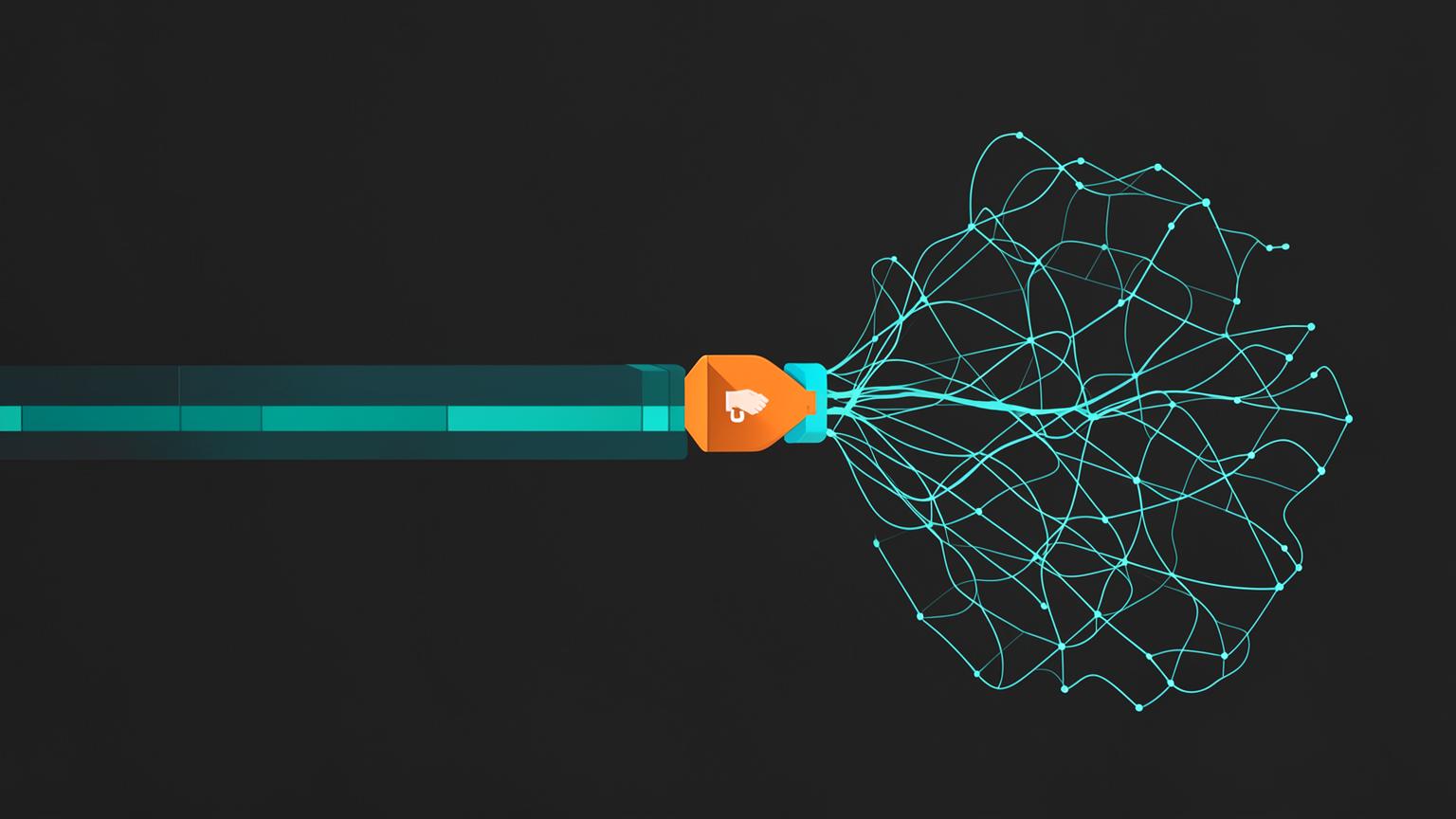
Agents are powerful because they can choose a path based on ambiguous observations. Traditional workflow engines are powerful because they execute known paths reliably. Production systems work best when we stop treating those as competing paradigms and use each where it is strongest.
A simple heuristic: if the graph is known and the data varies, prefer a deterministic workflow. If the graph itself may change based on semantic observations, an agent or planner becomes useful.
Sequential, parallel, and planned work
If step B requires the result of step A, execute sequentially. If two calls are known to be independent, parallelize them in code rather than paying model latency for serial execution. If the model must discover which subtasks are required, let it produce a structured plan and let deterministic software schedule that plan.
1User: “Update Acme and tell the sales team.”2 ↓3semantic planner4 ↓5[6 update_salesforce,7 notify_slack(depends_on=update_salesforce)8]9 ↓10deterministic orchestratorThe handoff to durable workflow
Once an agent has decided on a known business operation, the remaining execution often belongs in a workflow engine. A financial action might require payment update, ledger write, order-state update, and notification. The agent does not need to individually reason through a known transaction every time. It can hand that operation to a durable workflow with explicit retries and state.
Router versus planner
A router chooses a domain or capability set. A planner decides which steps are needed. That distinction matters when requests span multiple domains. “Update the opportunity and let the team know” should not be forced through a single Salesforce-or-Slack router; it is a multi-intent plan.
Deterministic routing after probabilistic classification
Sometimes intent cannot be known from UI state or business rules. In that case, an LLM can classify into a small structured set of routes. The classification is probabilistic, but once it returns {domain: salesforce}, normal code can deterministically expose only the Salesforce tool set.
PFPLabs takeaways
- Do not make known workflows agentic for style points.
- Parallelize independent work in code. Model turns are expensive coordination primitives.
- Separate routing from planning. One chooses a domain; the other constructs a task graph.
- Hand known durable processes to workflow engines. Agents decide; workflows execute.