


Fourteen years ago, a university assignment asked me to build a house in Maya3D.
At the time, I wasn’t the best coder. The artistic side, though, had a field trip.
A house on its own seemed too easy. So the scene grew: a wooden cabin beside the water, a dock, a little boat, a forest, a jeep, and a yellow seaplane. Then I had the plane fly and the jeep drive up to the house.
Good ole OpenGL days.
The house became a little world
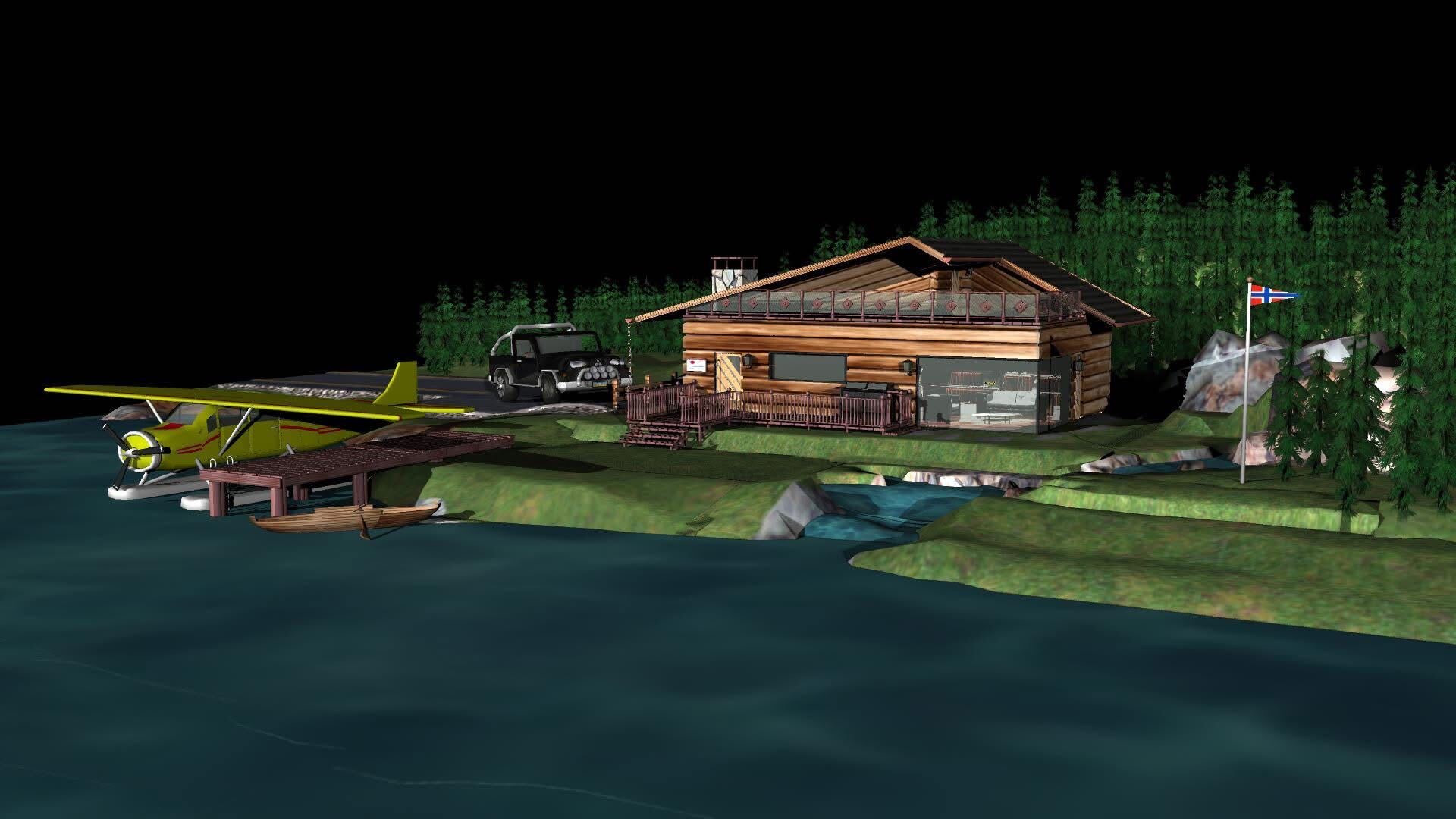
Looking at the original render, there’s quite a lot happening around that cabin.
The seaplane sits beside the dock. The jeep is parked near the house. A stream cuts through the rocks and runs into the lake. Trees fill the hillside, and a flag stands beside the water.
Those details give the scene a life beyond the building. There are ways to arrive, places to explore, and the suggestion of something happening just outside the frame.
The brief was to build a house. The result was a place with a story.
The animation I keep looking for
Somewhere, there’s a render of the actual animation, complete with sky and camera movement.
I’ve tried to find it every year since. So far, no luck.
That missing file is part of this story. The still image preserves the scene, but it can’t show the plane flying or the jeep driving up to the house. Those were part of what I loved adding to the assignment.
It also leaves an interesting question: what can you do with the pieces you still have?
A new look at the same idea
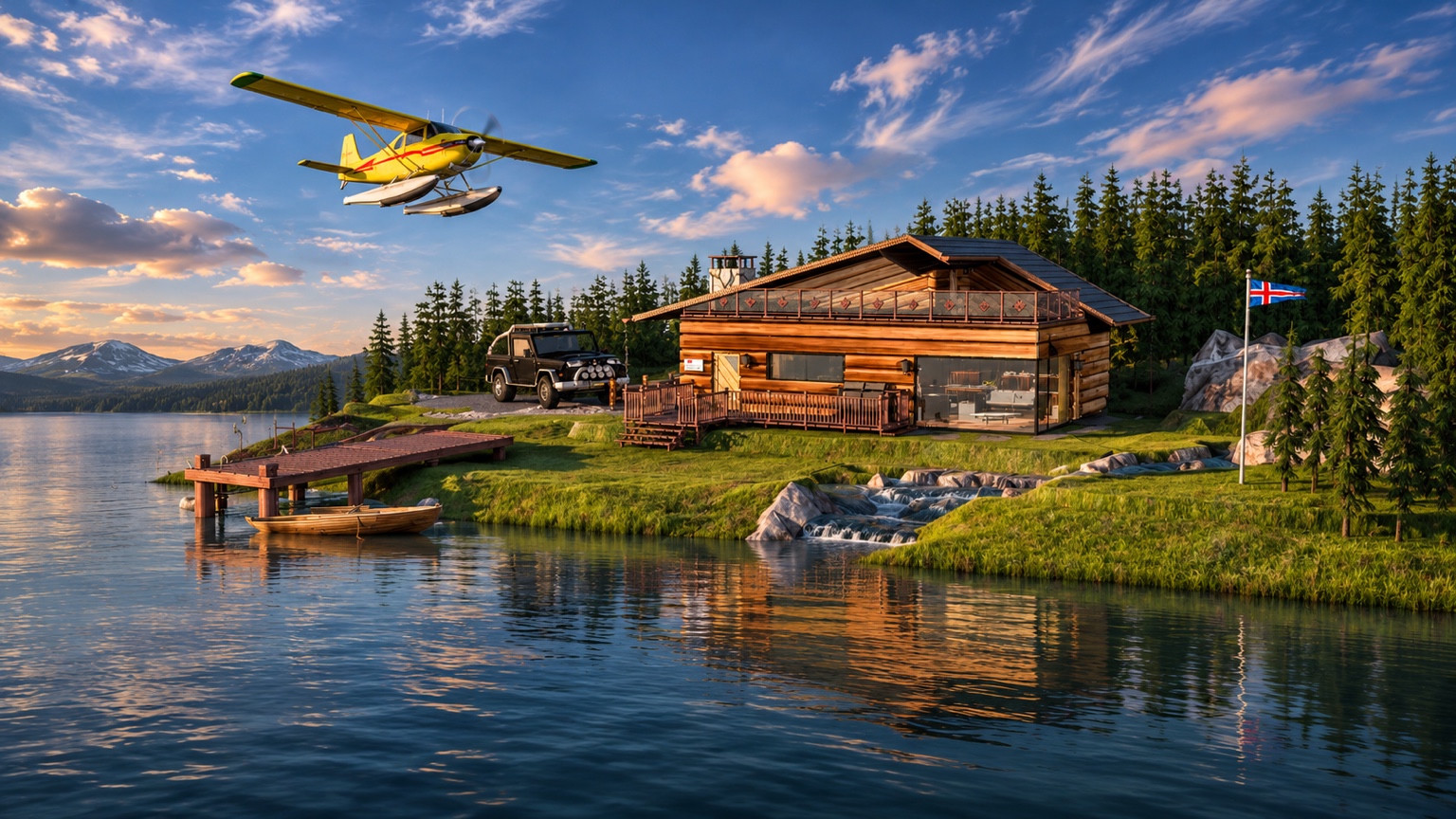
The newer image gives the scene a different atmosphere.
The cabin catches warm evening light. Mountains appear across the lake. The water reflects the sky, the trees, and the shoreline. The yellow seaplane is airborne above the house.
The familiar elements are still there, but the composition has changed. It’s a fresh interpretation of the scene, with its own lighting, detail, and sense of space.
Seeing the two together brings the original idea into focus. The house, the water, the trees, the plane: the building blocks of the scene were there all along.
From stills to a playable world
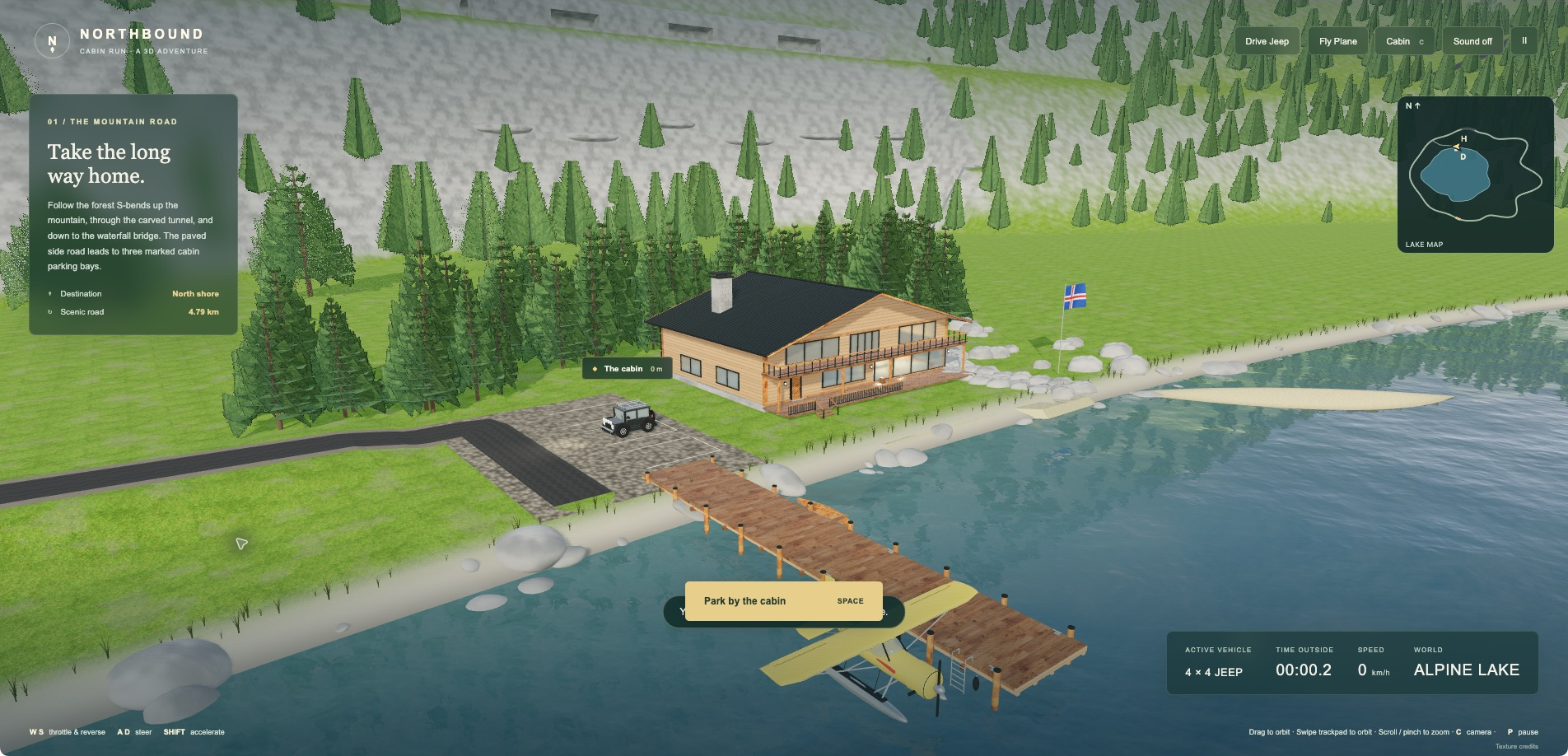
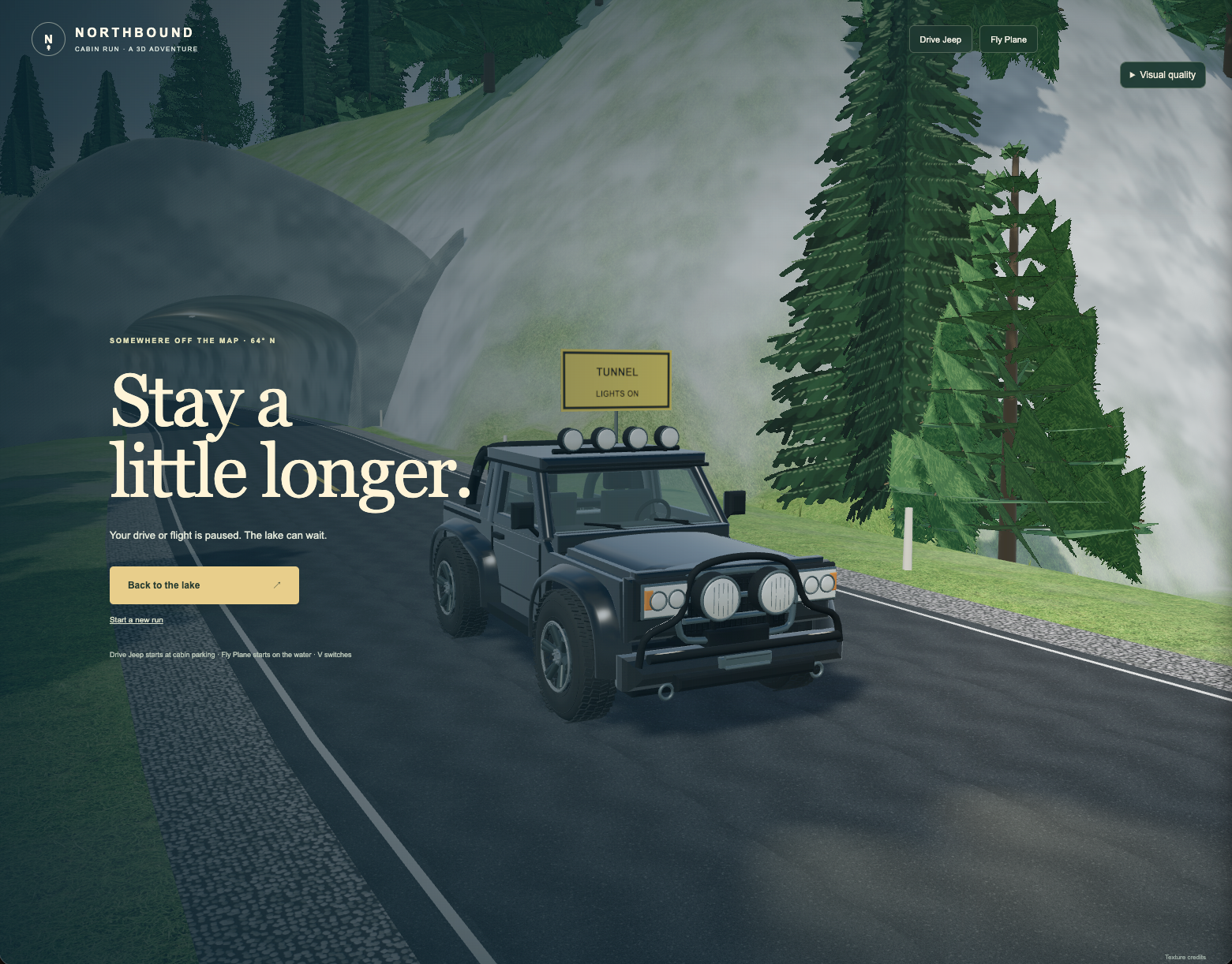
The next step was to take the cabin back into motion. Cabin Run is a new browser reconstruction of the scene, with a road around the lake, a vehicle to drive, and a seaplane to fly.
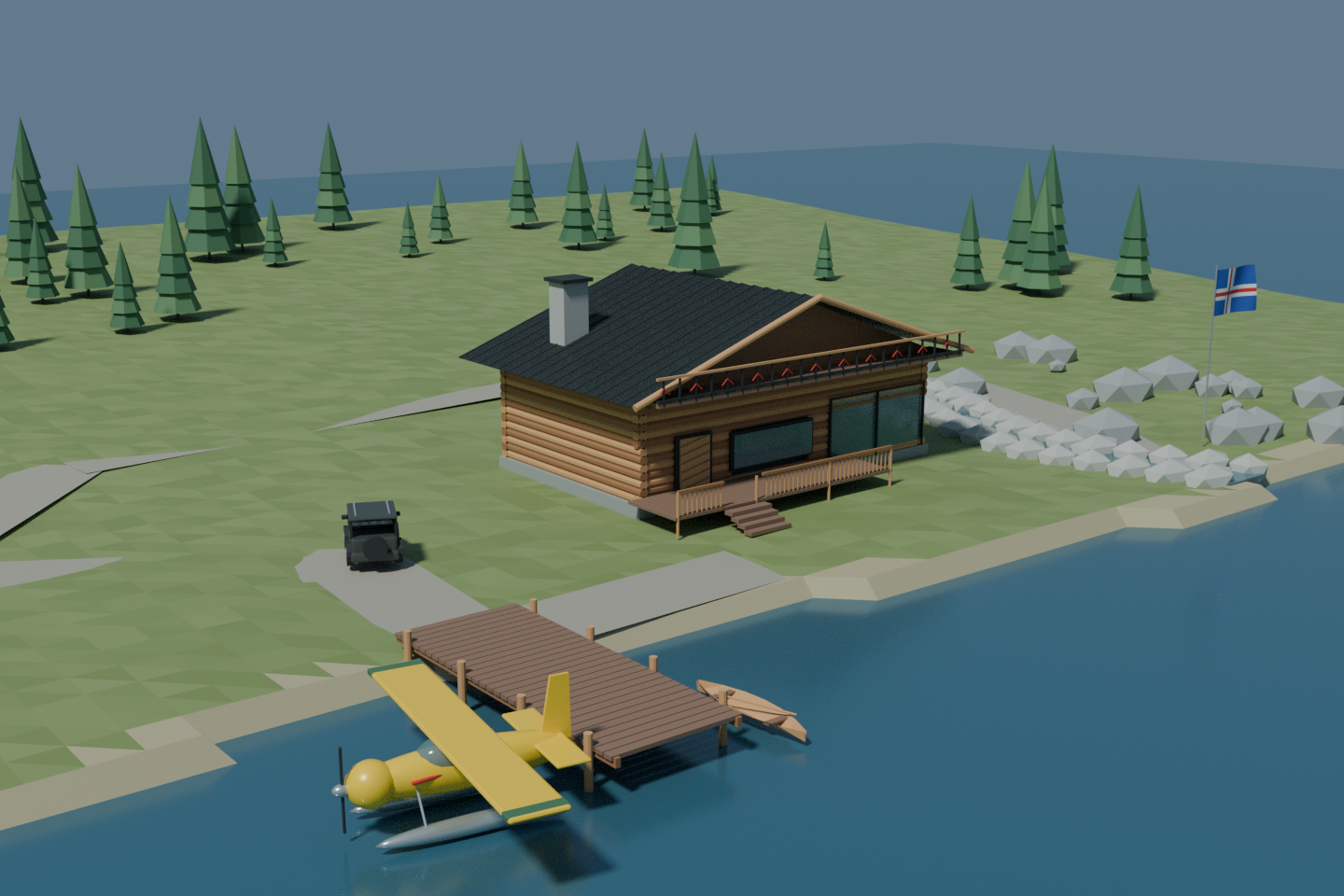
The saved images show some of the work in between: an early Blender scene, the timber cabin taking shape, and the surrounding terrain becoming somewhere to explore. Keeping those stages together makes it easier to see what changed and what stayed familiar.
From the original cabin to a playable world
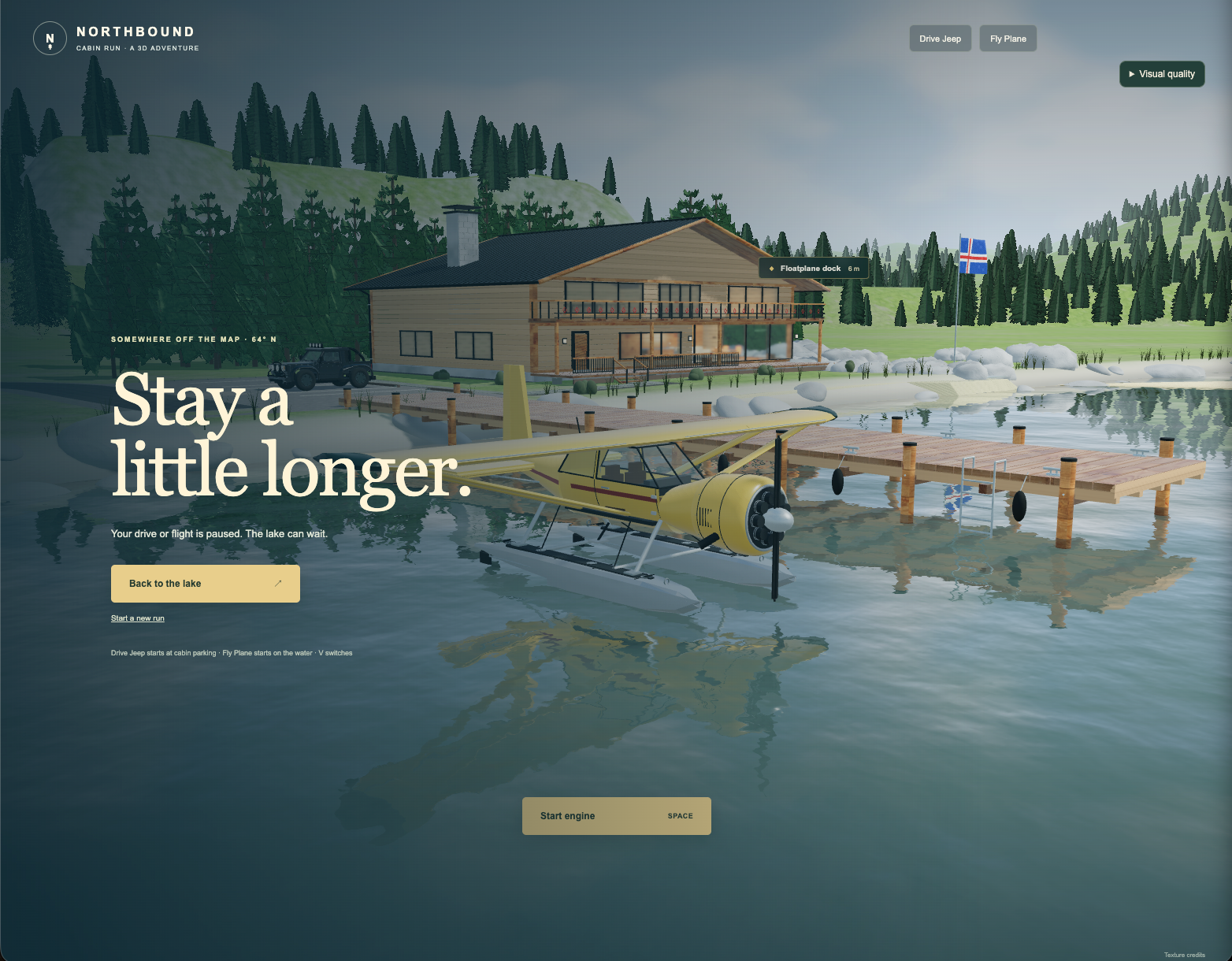
pfplabs/cabin-run
View the Cabin Run source on GitHub: the browser reconstruction of the lakeside cabin, its road and the yellow seaplane.
View on GitHubThe vehicles took a few passes
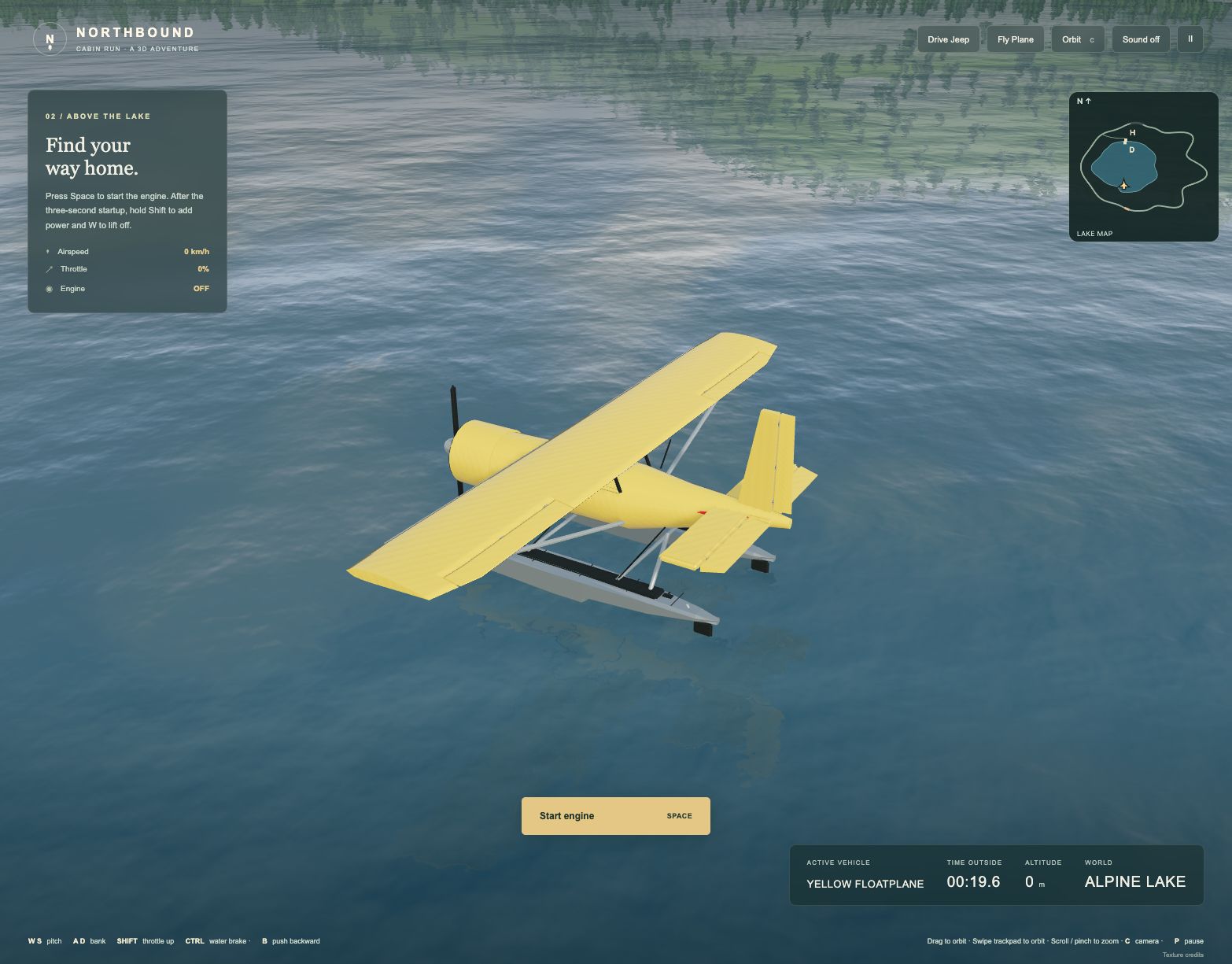
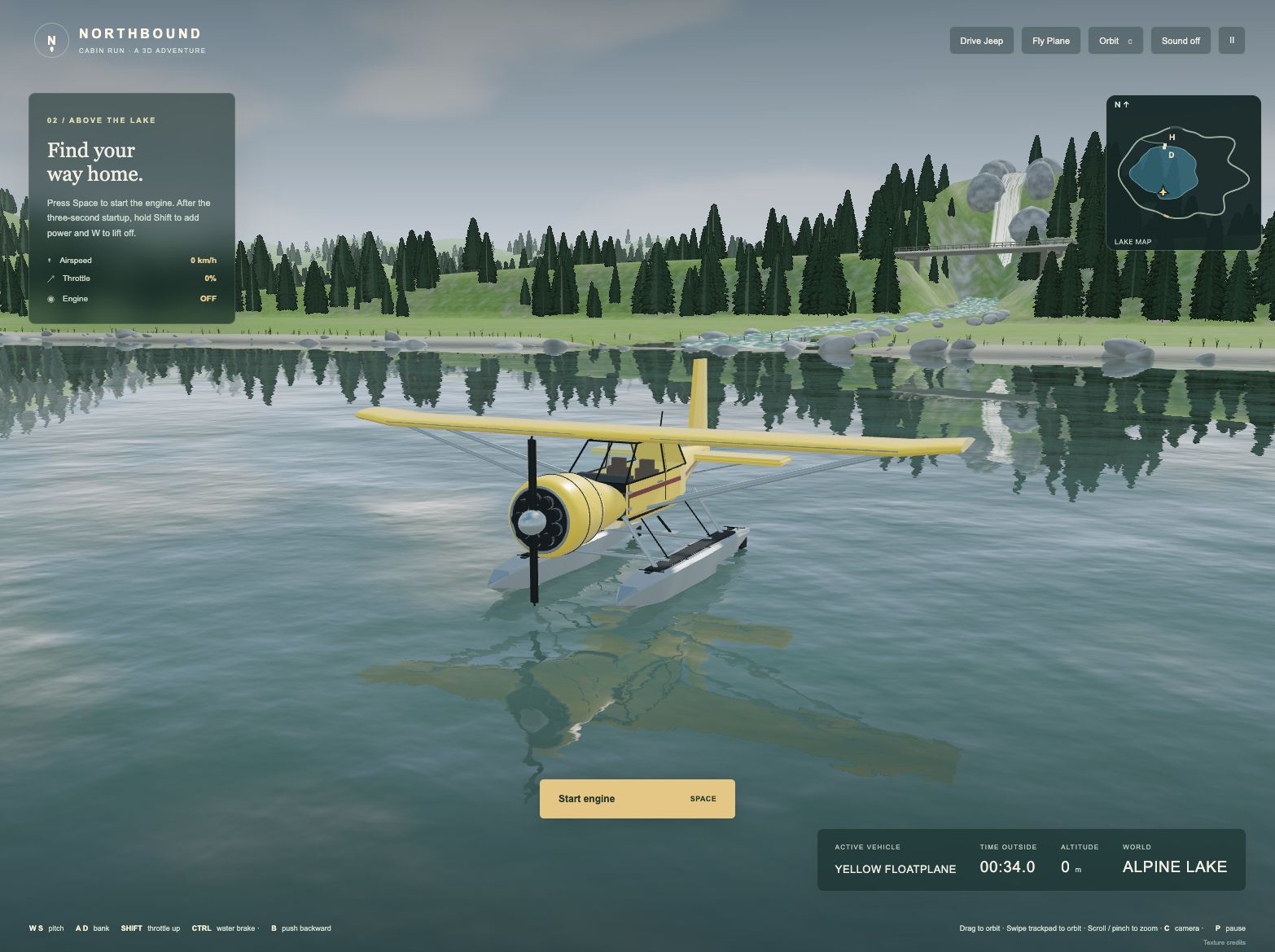
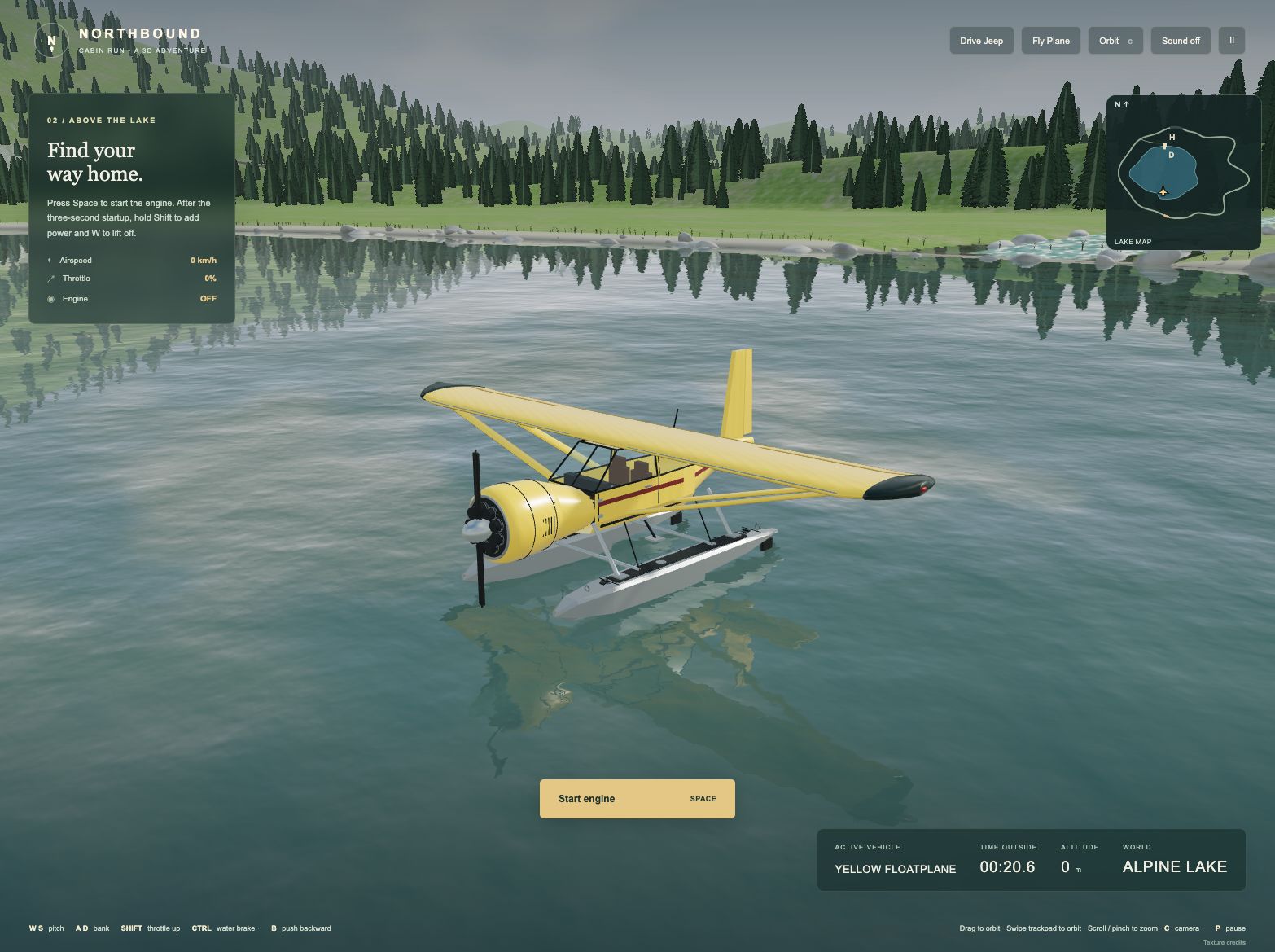
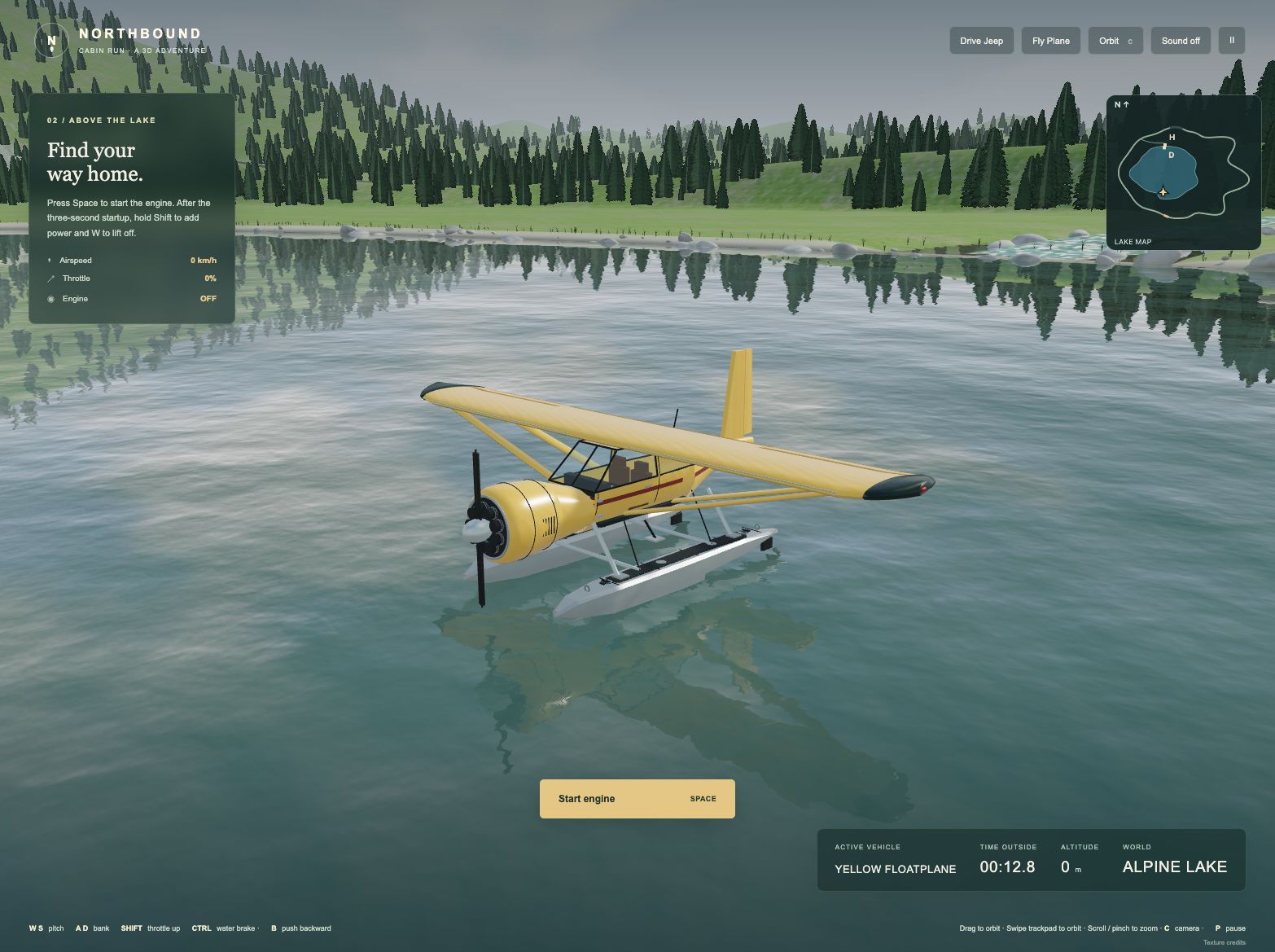
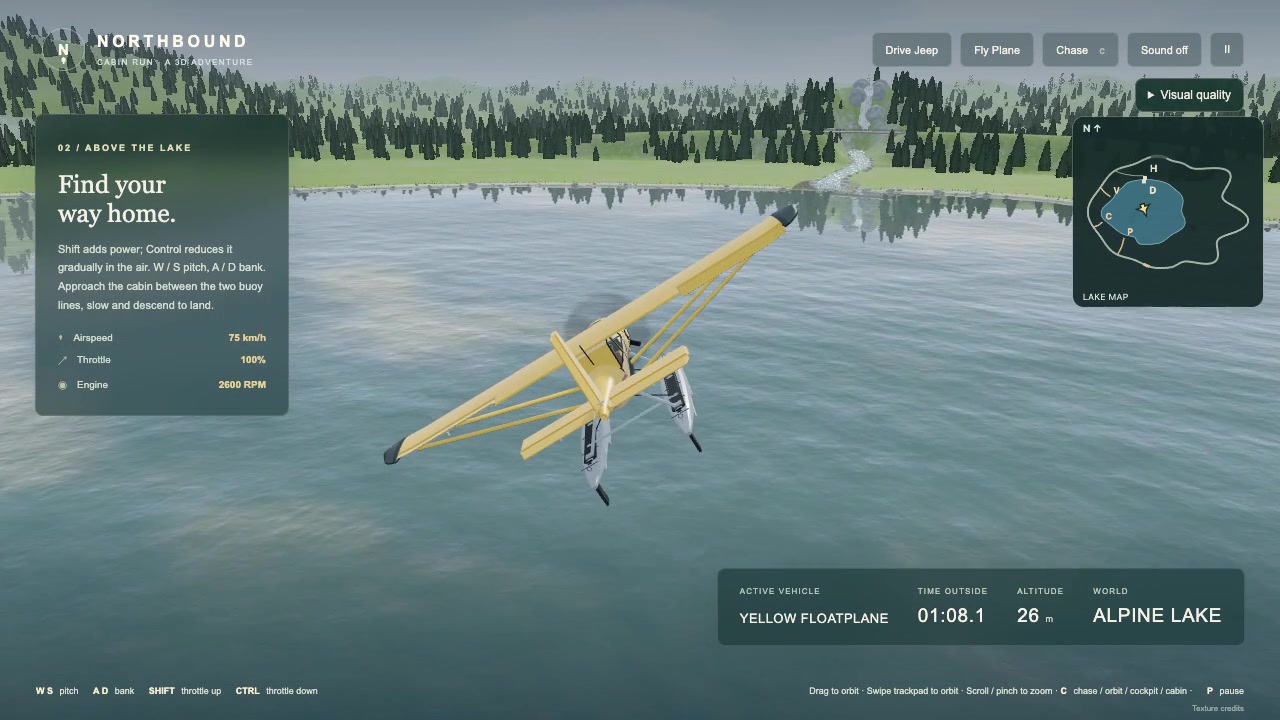
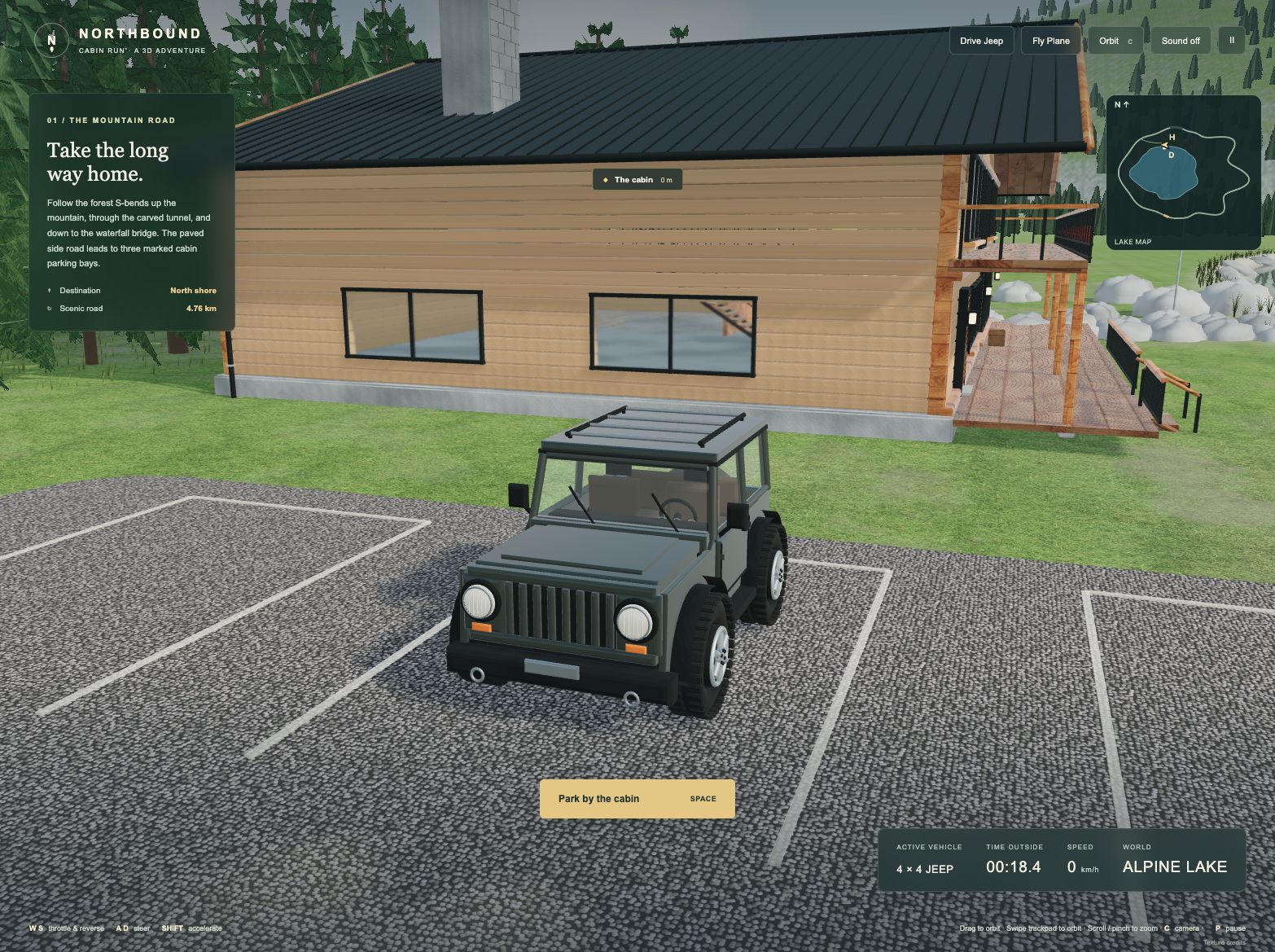
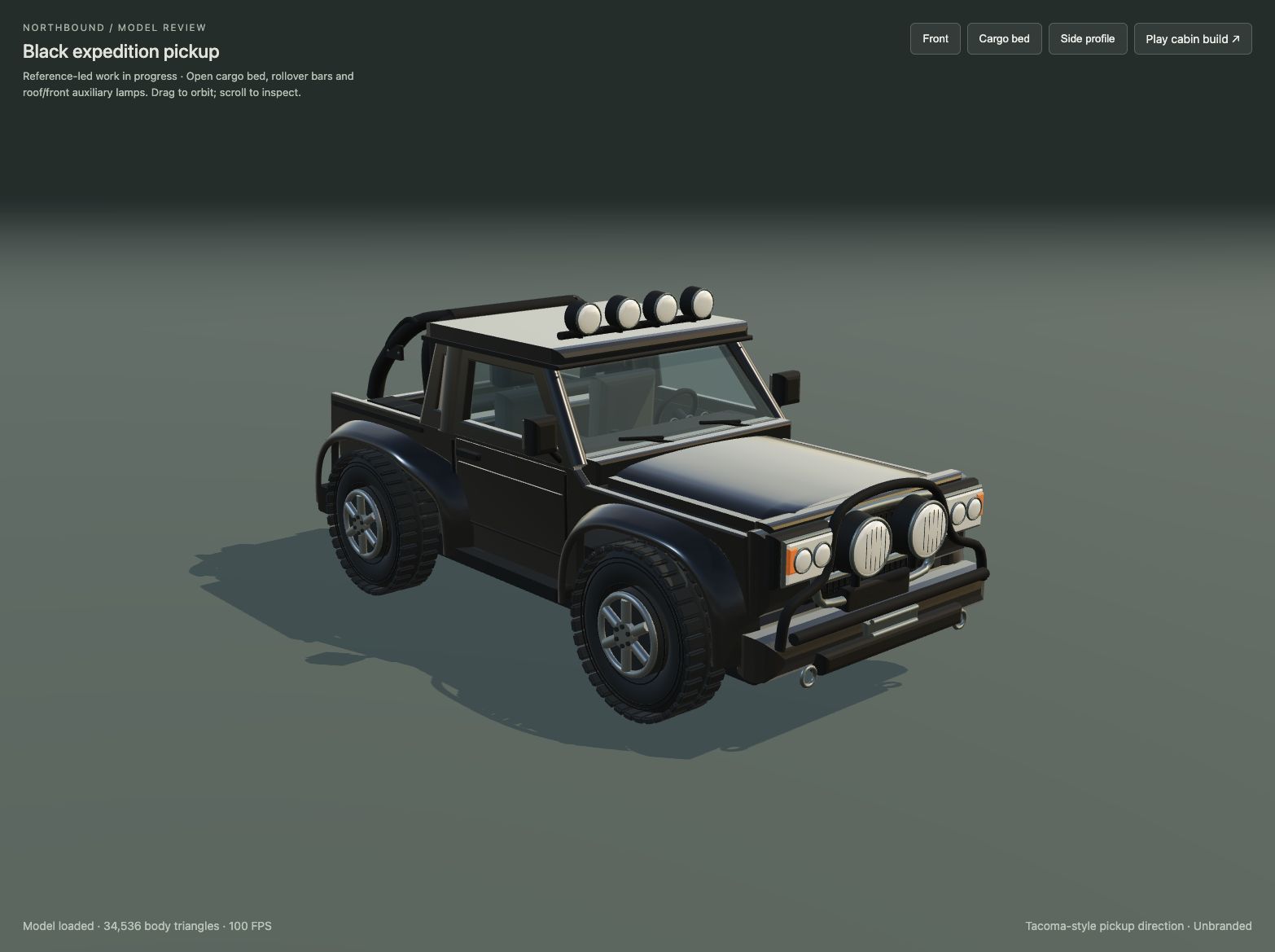
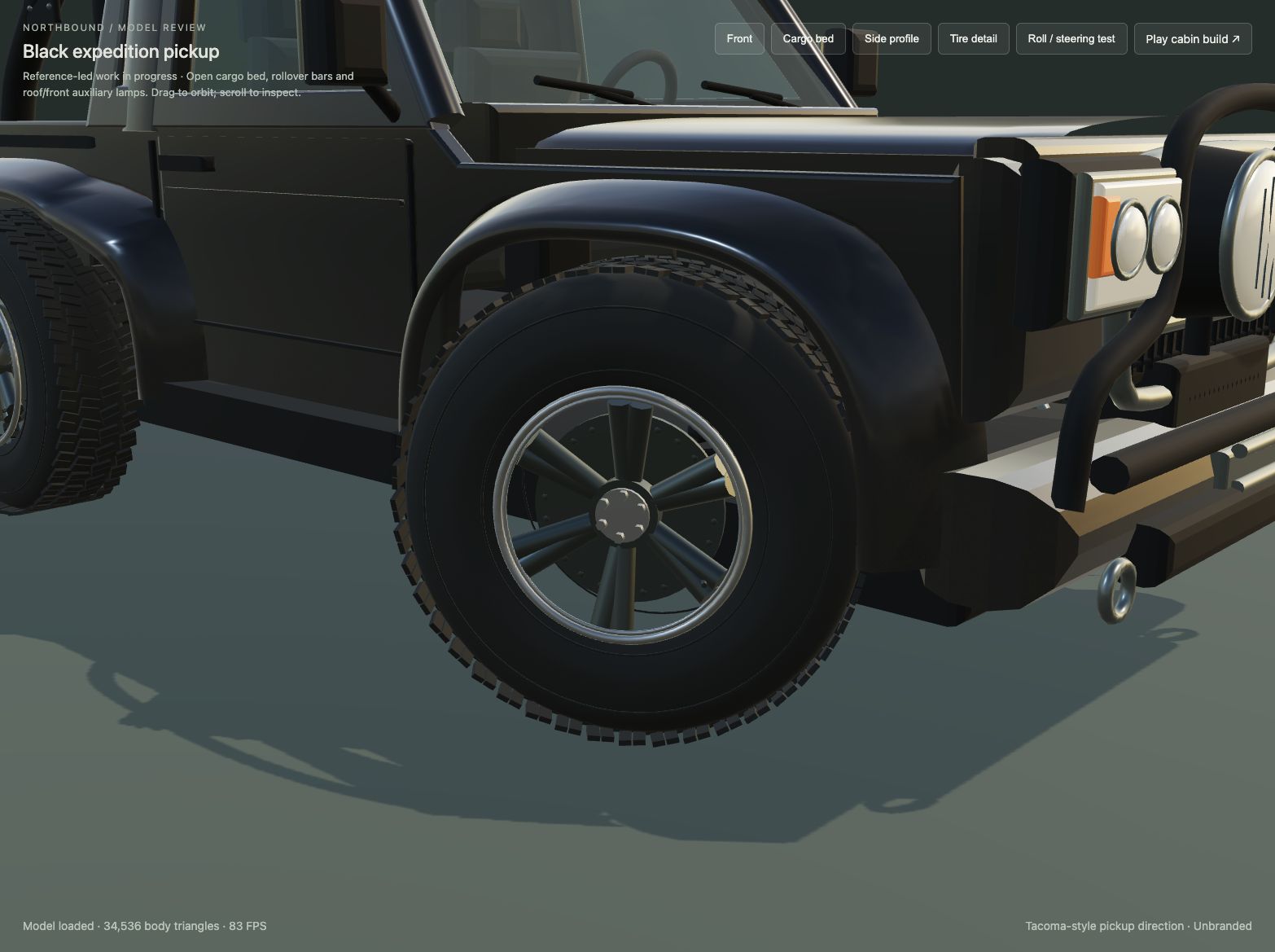
The seaplane and off-road vehicle each have their own development trail. The plane gained stepped floats, a rebuilt body and cockpit, and further work on the wing shapes and surface finish. The road vehicle moved from an early jeep-shaped model toward a black expedition pickup, with separate attention to the wheels and tires.
These are saved working stages. Some show isolated model reviews, and the vehicles are still being refined. The gameplay recording shows the build as it actually runs.
The seaplane, one pass at a time
From the early jeep to the pickup study
Another project from those days: F1 2013
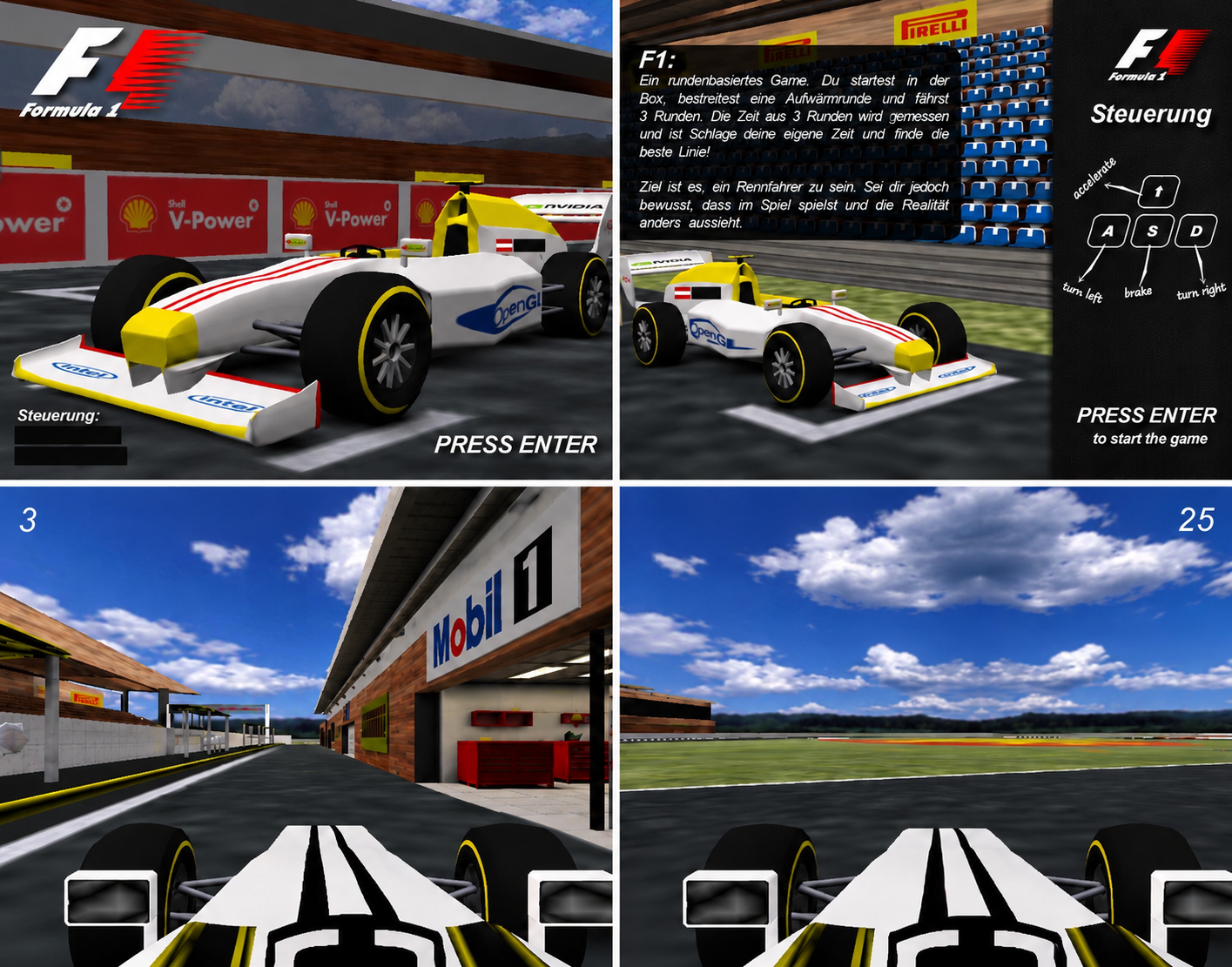
The cabin was one part of that period of learning. A separate university project, F1 2013, brought modeling and programming together in a lap-based racing game for Computergrafik 1. We used OpenGL and Maya 2013, and my contributions included environment modeling, modeling, game programming, and the idea and concept.
The original collage shows the title screen, the controls, a cockpit view through the pit lane, and a view out onto the circuit. It adds a concrete record of the environments, vehicles, and interfaces I was helping build.
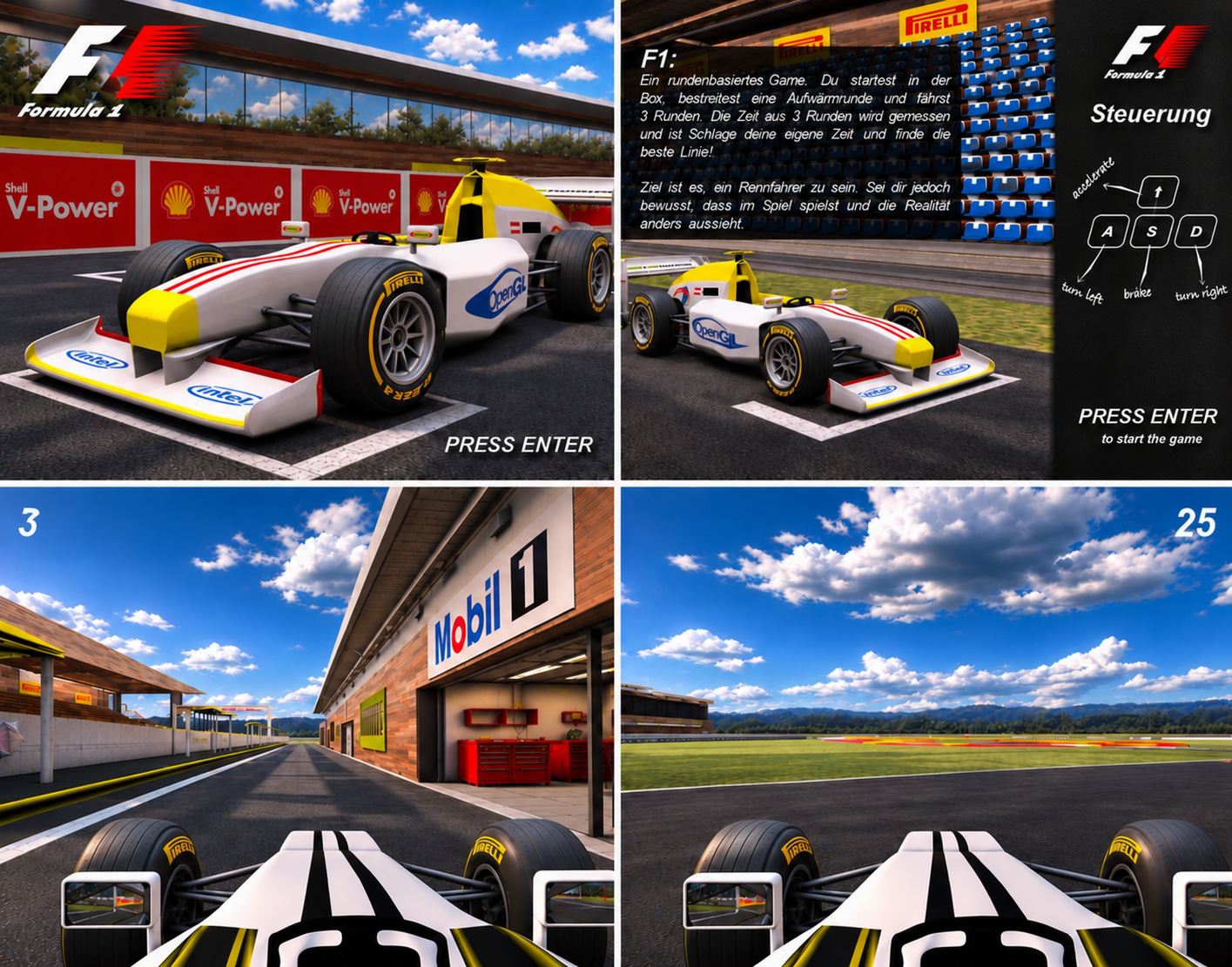
The reimagined collage revisits those same views with more detailed surfaces, tires, lighting, and skies. Like the cabin image, it is a new visual interpretation. The original screenshots remain the evidence of how the game looked.
An archived university project entry documents the project, tools, and contributions. Together, the cabin and racing game show the same interest in building a scene and then giving it something to do.
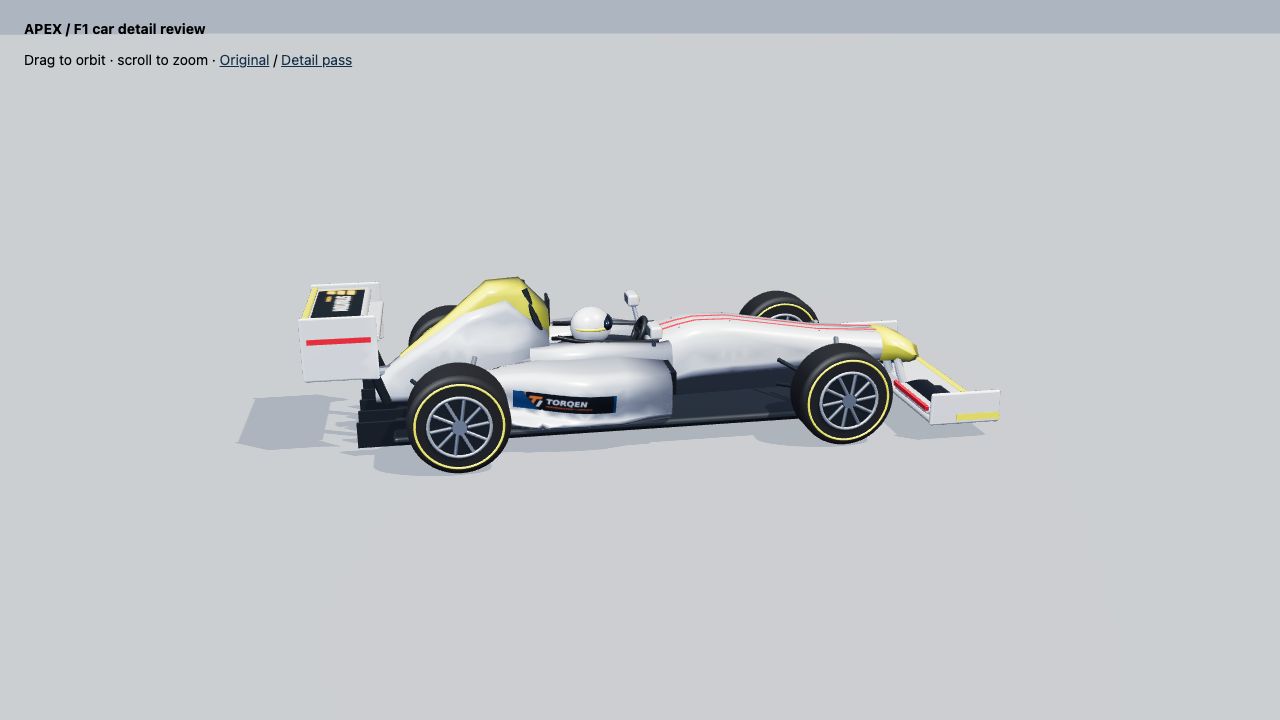
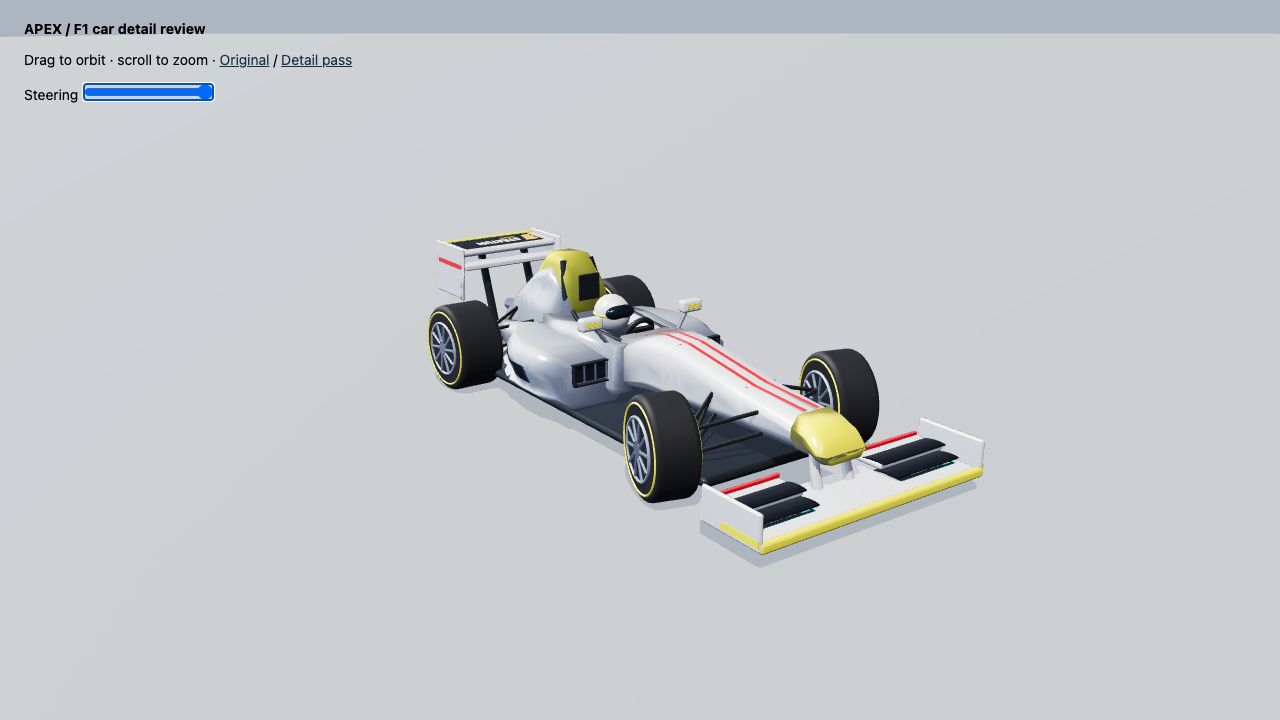
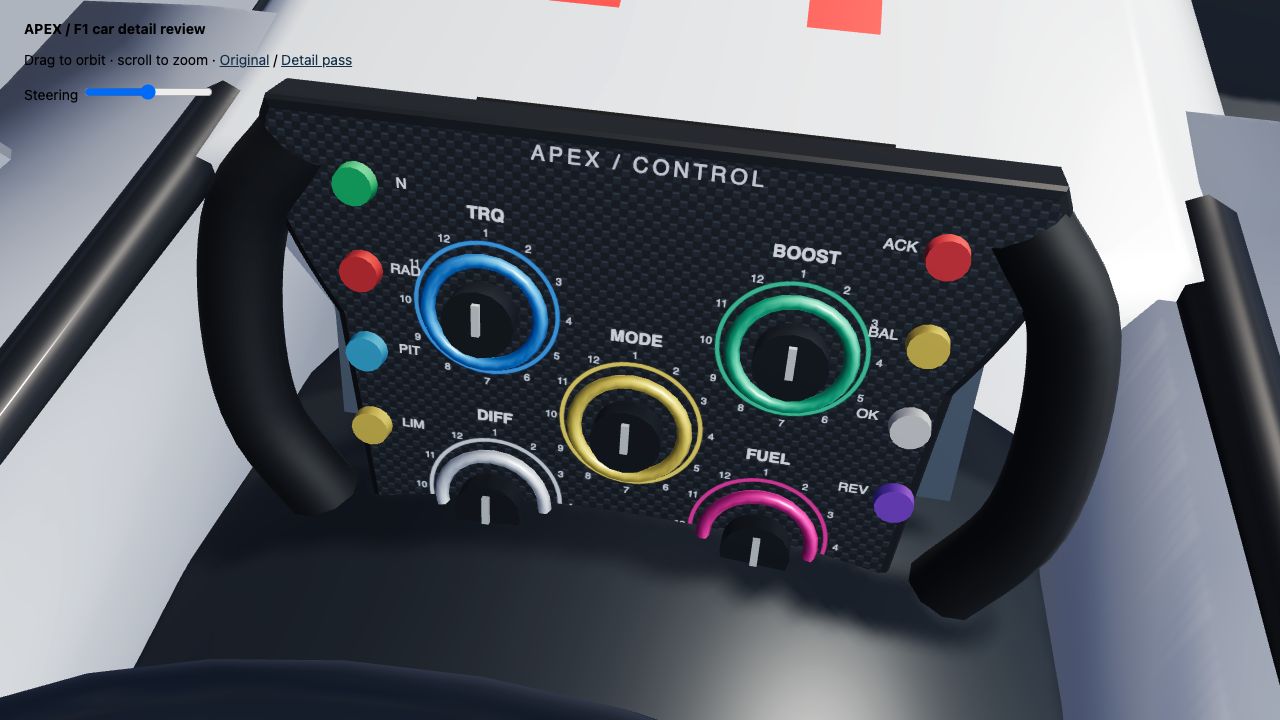
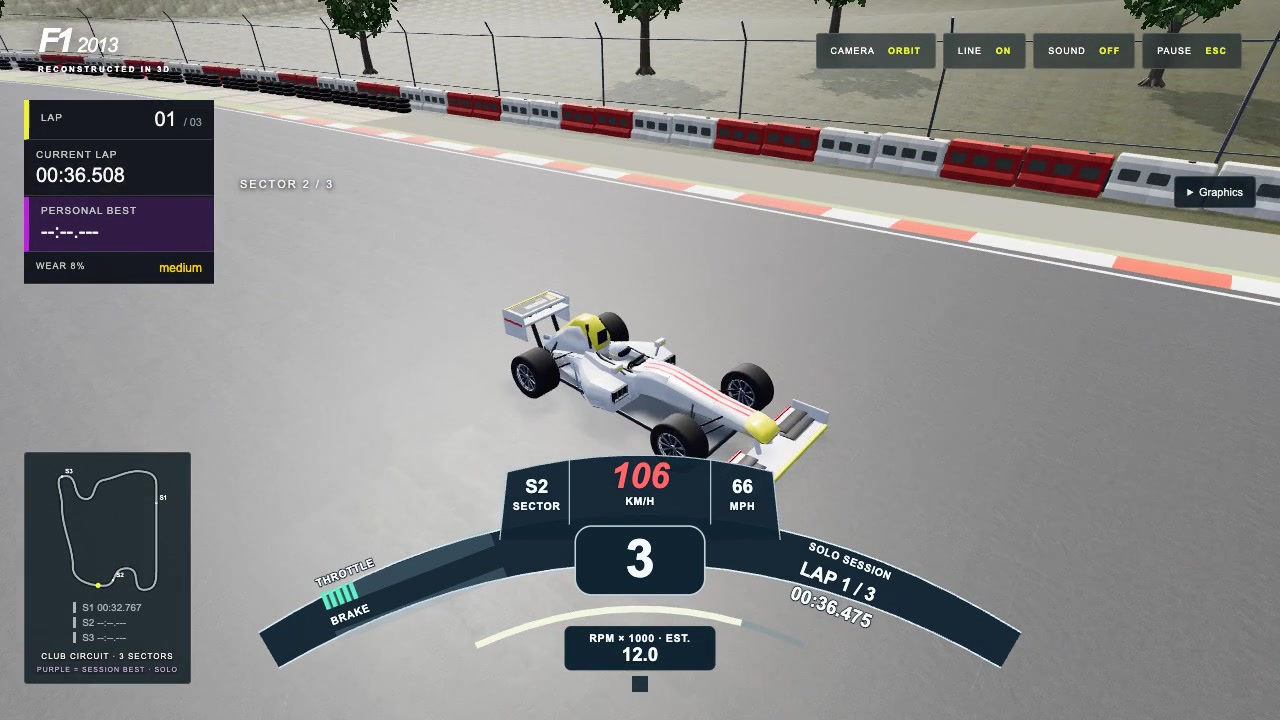
The new racing build continues from those visual references. The saved development views show the car’s body profile, connected suspension and cockpit controls. The latest recording takes it onto the circuit, with cockpit and outside-camera views of the car in motion.
From F1 2013 to the new racing build
pfplabs/apex-club-circuit
View the racing reconstruction source on GitHub: the new racing build inspired by F1 2013.
View on GitHubPicking up an old idea
When I shared the old render, I caught myself thinking that I could probably throw it into ChatGPT and see what happened.
There’s something appealing about being able to pick up an old creative project from a single surviving image. The original files might be missing. The tools might have changed. There can still be enough there to start exploring again.
The original Maya animation is still missing. What has changed is that the surviving images now have a new playable chapter alongside them: a lap of the circuit, a drive around the lake, and the yellow plane back in the air.
For now, there’s a cabin by the water, a road to follow, and plenty of room to fly.